Country
Region
Sub-region
Producer
Wine type
Volume
Rating
Vintage
Packaging
Price
Contact
Ask a question
Nahe
Nahe lies around the tributary of the Rhine of the same name, south of the Mosel. The soil varies more over short distances here than in virtually any other German wine region.
Our range includes wines from the Nahe by producers including Dönnhoff, Schäfer-Fröhlich and Emrich-Schönleber. If you would like to explore Germany further, you will also find Mosel in our range.
Grapes and style
In the Nahe, too, riesling is the most important grape, but the region offers more variety than many other German regions. Besides riesling, silvaner, weissburgunder and spätburgunder are grown, among others. The rieslings often combine the fruitiness of the Rheingau with a fine, fresh tension.
The wines have an elegant, balanced character, with aromas of yellow fruit, citrus, herbs and often a stony minerality. Thanks to the mild climate, the wines are usually slightly riper and rounder than those of the Mosel.
Location and soil
The Nahe is a tributary of the Rhine and flows into it at Bingen. The wine region lies sheltered between ridges of hills, which makes the climate relatively mild and dry, with plenty of sun. This allows grapes to ripen that struggle elsewhere.
The greatest hallmark of the Nahe is its remarkably varied soil. Within a short distance you will find volcanic rock, slate, quartz, sandstone and loam. One river can thus yield wines of very different characters: one austere and mineral, another riper and fruitier.
Classification and rules
The Nahe is an Anbaugebiet in its own right, an official German wine region. Wines made here fall under the German system of Qualitätswein and Prädikatswein. Within the Prädikat system, Kabinett and Spätlese denote lighter wines and Auslese richer wines, depending on the ripeness of the grapes at harvest.
The label also often indicates an Einzellage: the name of an individual vineyard. In a region with such great differences in soil this makes sense, because the vineyard determines much of the style. For a comparison with a more classic, cooler region, take a look at the Mosel.
Ageing and serving
Dry and off-dry riesling from the Nahe is often at its best after a few years, but good wines can keep ageing for years and gain depth in the process. Wines of richer Prädikate, such as Auslese, have an even longer shelf life.
Serve the wine at 8 to 11 °C. Dry riesling pairs well with poultry, veal, fish and dishes with cream or herbs. The slightly richer style is also a good choice with pork and light cheese dishes. Serve red spätburgunder from the region slightly warmer, at around 15 °C.
Producers in our range
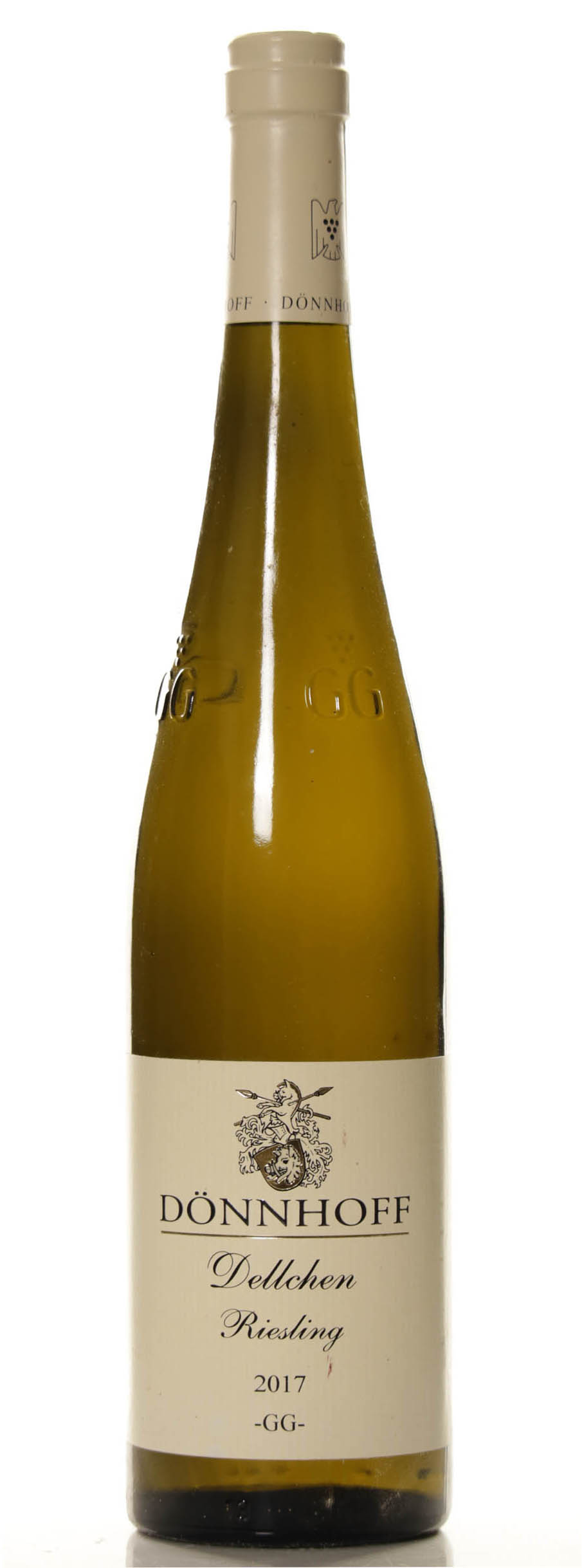
These producers feature in our Nahe range: Dönnhoff (Hermannshöhle and Dellchen), Schäfer-Fröhlich (Stromberg) and Emrich-Schönleber (Halenberg).
More from Germany
You will find more wines from Germany under Mosel.